Founder’s case study • DentalFry • SEO & business
How a ₹2,000 dental blog became a business—and taught me where growth can go wrong.
I launched DentalFry while studying dentistry. Six articles gave me my first breakthrough. A better site structure helped me compete again. But the hardest lesson came after the enquiries arrived.

Founder, DentalFry • First-person retrospective
Case study updated: 5 October 2026
How to read this story
The work, the wins and the limits of the evidence.
This is my account of building DentalFry, not a promise that another website will reproduce its results. I no longer actively manage the site, and the original Analytics and Search Console records from the growth period are not available to me.
01 · The starting point
I knew how to study SEO. I had not yet learned where I could win.
On 1 August 2016, I launched DentalFry. I was in my third year of BDS—Bachelor of Dental Surgery—at a private college in Shimoga, Karnataka. I worked on the website for around two to three hours a day, alongside my studies.
Blogging and making money online were attracting enormous interest. I read bloggers such as ShoutMeLoud and Neil Patel, tried things on WordPress, and learned SEO on my own. I had ranked a few keywords before, but I was struggling to build a blog that worked consistently.
My first direction was technology. It was a crowded field, and I had not found a subject within it that I understood well enough to make my writing stand out. Publishing took time. Research took time. Even paying for hosting was a concern.
My starting budget for DentalFry was about ₹2,000. There was no budget for a content team or expensive SEO subscriptions. I wrote the articles myself. That constraint forced a useful question: what could I explain better because I was already living it?
Dentistry was not just a keyword opportunity. It was the world I was studying in every day.
I began looking at questions dentists and dental students were asking. In my research at the time, DentalOrg was the one established competitor that stood out to me. That was my assessment of the niche, rather than a complete census of every dental website on the internet.
I saw room for clearer, more useful information. Instead of competing broadly in technology, I could answer practical questions from people whose situation I understood.
02 · The timeline
From articles to a business—and then a change of direction.
- 1 August 2016
DentalFry goes live
A ₹2,000 start, self-written content and two to three hours of daily work during my third year of BDS.
- About one month later
The first search breakthrough
After roughly six articles, I remember reaching position one for “career options after BDS.”
- 2016 admission seasons
A consulting opportunity appears
An MDS admission article helps bring more than 1,000 unique enquiries across calls and emails, according to my recollection.
- By 2018
Competition grows
More competitors and a lack of content freshness push me to reconsider the site’s organisation.
- Restructuring phase
Four days of manual migration work
I map URLs in Excel, organise parent and child pages, add 301 redirects and revise internal links. I notice improvement within less than 45 days.
- Later expansion
Dental products and clinic projects
The site supports product orders and about seven clinic-related projects, including a mix of interior work and product supply.
- Around 2018 · approximate recollection
A clinic commitment goes wrong
A ₹12 lakh commitment becomes an estimated ₹17 lakh project. I fail to handle the situation and client communication responsibly.
- Later years · date not recorded
I narrow my focus and move on
I return to consulting, then shift my attention to another business. DentalFry stops receiving my ongoing management.
The launch date is specific. Later stages reflect my recollection; they are not a dated project log.
03 · Research and content
The first six articles changed my confidence.
I did not have Semrush or Ahrefs subscriptions then. My research relied on Google’s suggestions, related searches, Google Keyword Planner and reading the pages already ranking.
When I found a competitor appearing for a topic, I read the article closely. Was it actually useful? Which questions did it leave unanswered? Which related searches suggested that readers needed more than the headline answer?
I researched related phrases and used them naturally in the writing. At the time, I called them “LSI keywords.” Looking back, the useful part was covering the reader’s questions and vocabulary—not treating a list of terms as a ranking formula.
| Topic | Reader’s practical question | Why I covered it |
|---|---|---|
| Career options / what after BDS | What can I do after completing dentistry? | A broad starting point for students deciding their next step. |
| Government jobs after BDS | What alternatives exist beyond private practice? | A focused career question with practical implications. |
| Working in Canada as a dentist | What does moving abroad involve? | A specific destination and qualification question. |
| Working in New Zealand after Indian BDS | How does an Indian dental graduate explore this path? | A different reader journey that deserved its own explanation. |
| Dental clinic names | How should I name a new practice? | A useful resource for dentists preparing to open a clinic. |
| Dental clinic interior design | How can I plan a clinic space? | A practical topic that later generated service enquiries. |
These topics are historical examples, not current career or admission guidance. Requirements change, so readers making those decisions should check up-to-date official information.
I remember that it took about six articles and almost a month to see the breakthrough. “Career options after BDS” reached first position—not merely the first page. That is a remembered ranking from that period, not a claim about where DentalFry ranks today.
My advantage was access to the subject.
I did personal research, spoke with friends and people I knew, and connected with dentists through Facebook. Those conversations helped me understand what students were uncertain about and where generic explanations fell short.
I added my own perspective rather than simply rewriting a competing article. Over time, the content became more detailed: images, tables, graphs, lived experience, supporting screenshots and testimonials where I had them.
Many articles were at least 2,000 words, and some exceeded 5,000. The length came from the amount I wanted to explain. I would not use those lengths as a rule for another project; a useful answer should be as long as its subject requires.
I grew the site without deliberately building backlinks.
I did not run a backlink-building campaign. My effort went into the website, the content and its internal organisation. That shaped my long-standing preference for improving what the reader actually experiences.
This does not establish that backlinks never matter, or that the site received no natural links. It explains where I spent my time. DentalFry showed me that I could make progress without making deliberate link acquisition the centre of my work.
Today I recognise the emphasis on firsthand knowledge and trust in that approach. I was applying those instincts before I knew the later terminology commonly used to describe experience and expertise in SEO.
04 · From traffic to enquiries
AdSense was approved. Consulting made the opportunity clearer.
Getting AdSense approval felt like progress, but the earnings were not enough for what I wanted to build. I started looking for a service connected to the needs already bringing people to the site.
I had experience helping students explore their options after BDS. I published an article about MDS admission and added educational consulting as a service. The response surprised me.
Across the 2016 admission seasons, I remember receiving more than 1,000 unique enquiries, including incoming calls and emails. This was a seasonal total across those channels, not 1,000 calls in one day or a count of paying customers.
A student searches for help with an admission or career decision.
The article shows my understanding and gives the reader context.
The reader contacts me to discuss help with their own situation.
Enquiries came through the phone number, forms, email and WordPress comments. I also contacted some commenters by email to respond to their questions. Responding to a comment is separate from obtaining permission to send someone a newsletter.
Email enquiries were often the better conversations.
In my experience, email enquiries converted better. Many were serious prospects, including NRIs who had the capacity to pay for consulting. They were looking for a service, rather than only collecting general information.
My consulting fees ranged from approximately ₹50,000 to ₹1 lakh per admission season. That is the price range I remember charging, not a published revenue total. I do not have a verified conversion rate or client count for that period, so multiplying the enquiry count by those fees would give a misleading picture.
The change was substantial for me: a blog became a source of business conversations. It gave me the confidence to expand, but it also made it easier to assume that every new enquiry represented an opportunity I should take.
05 · The structural turning point
By 2018, publishing more was no longer my only problem.
Competition had become much stronger. I was falling behind, and the content was not staying fresh enough. I began learning about silo structure and how internal links connect related pages.
Previously, the site used ordinary categories and a flat /post-name/ permalink pattern. I reorganised related material around parent topic pages and more specific child pages.
One example I remember was the “options after BDS” group. The parent introduced the subject. Supporting pages covered different paths, and I interlinked the articles within that topic group.
/options-after-bds//options-after-bds/clinical-research//options-after-bds/army//options-after-bds/government-jobs//options-after-bds/mds/Reconstructed from my recollection of the migration. These paths illustrate the historical structure; they are not a verified inventory of today’s live URLs.
The migration was manual work, not a switch I turned on.
I used Excel to map the old URLs to the new destinations. I implemented permanent 301 redirects using the WordPress Redirection plugin and changed the internal links to fit the topic groups. The work took around four days.
| What changed | My practical action | Purpose |
|---|---|---|
| Topic organisation | Create parent pages with focused supporting pages. | Make related content easier to understand and navigate. |
| URL structure | Move relevant articles under their parent topic. | Reflect the organisation in the page paths. |
| Old URLs | Map destinations in Excel and add 301 redirects. | Give visitors using old addresses a route to the new pages. |
| Internal links | Connect relevant articles within each group. | Help readers continue through related questions. |
Today, AI could help prepare a mapping sheet, identify inconsistencies or suggest links. I would still review the destinations and test the migration. My remembered four-day effort is not proof that every comparable job can now be completed in four hours.
Nor would I turn the historical silo approach into a rule forbidding every link between topics. The useful principle is relevance: a link should help the reader. Nested URLs alone do not explain the whole result, and changing working URLs needs a clear reason.
06 · Outcomes and evidence
I saw improvement quickly. I cannot reconstruct an exact growth calculation.
Within less than 45 days of implementing the structure, I remember better rankings, more visitors and more enquiries. The improvement was across sections, rather than limited to one article.
I have described the change from memory as more than 1,800% growth in visitors and enquiries. I no longer remember the exact starting and ending counts, the measurement window or how that percentage was calculated. It is an unverified recollection, so I would not use it as a proven headline result or plot it as a measured traffic curve.
During peak admission periods, I also remember the site receiving more than 20,000 visitors per day. The original report needed to verify that daily figure is unavailable. That is distinct from the estimates shown in the Semrush image below.
| Outcome | My account | Evidence status |
|---|---|---|
| First notable ranking | Position one for “career options after BDS,” after about six articles and one month. | Founder recollection; historical ranking record unavailable. |
| Admission enquiries | 1,000+ unique enquiries across calls and emails in the 2016 admission seasons. | Founder recollection; no archived enquiry export supplied. |
| Restructuring response | Improvement noticed in less than 45 days. | Observation from memory; no controlled comparison. |
| Growth percentage | Remembered as 1,800%+, without the underlying calculation. | Unverified estimate; not presented as measured data. |
| Peak traffic | Remembered as 20,000+ visitors per day in peak season. | Original Analytics data unavailable. |
| Current search history image | Semrush traffic and keyword trend screenshot supplied for this retrospective. | Third-party estimates; cannot verify the historical daily peak. |
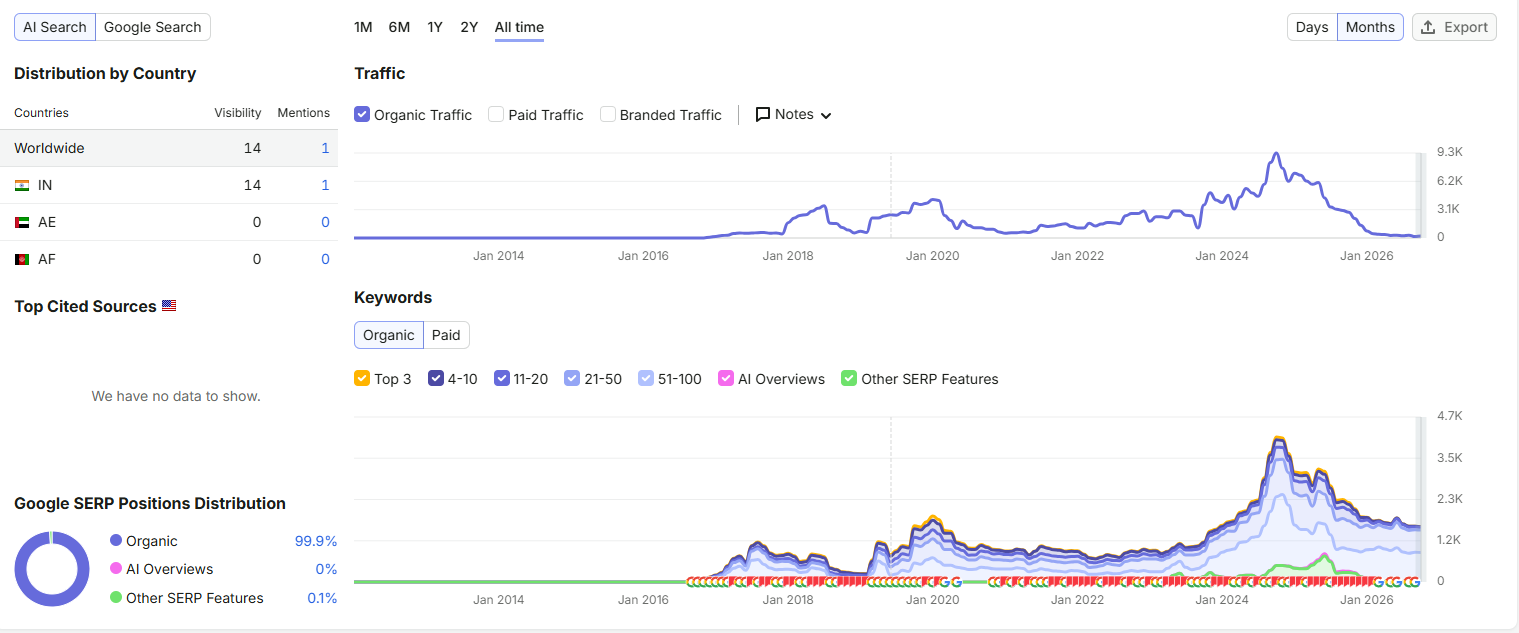
I have since moved to another business and stopped actively managing DentalFry. This story describes the work I did and what I remember from that period; it does not claim that those rankings are maintained today.
07 · Expansion beyond consulting
The same audience opened several business doors.
I added e-commerce for dental products and materials. I tied up with a stockist, obtained product and pricing details, and took orders. The stockist handled packing, and we arranged dispatch. This was a supplier-supported model, not a large inventory operation of my own.
The margins were low. It taught me that an order is not automatically an attractive business: pricing, fulfilment and the margin left after serving the customer matter.
The dental clinic interior design topic also brought clients. I became involved in approximately seven clinic-related projects. Some involved interiors, with design handled through a collaborator; others only required products or materials. It would be inaccurate to describe them all as seven complete interior projects delivered by me.
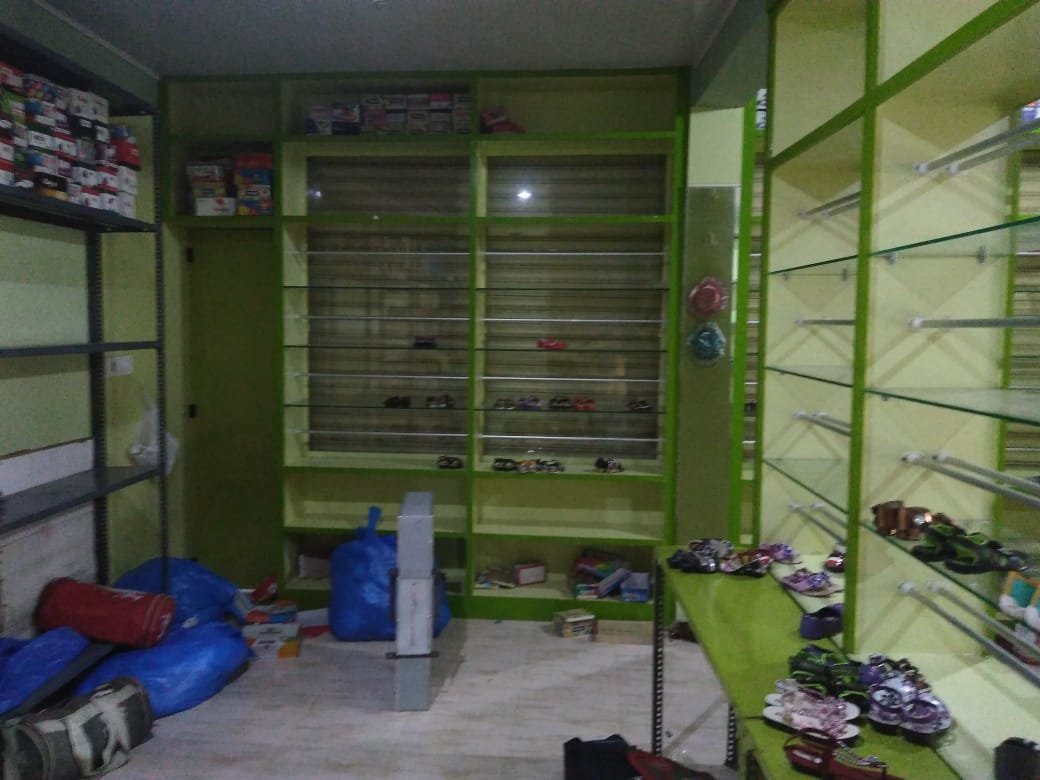
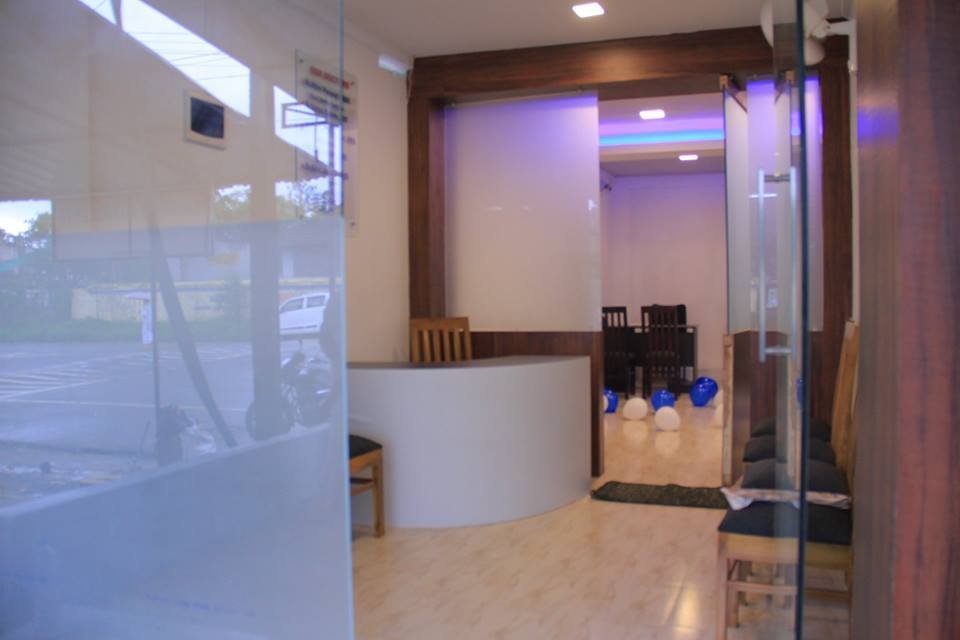
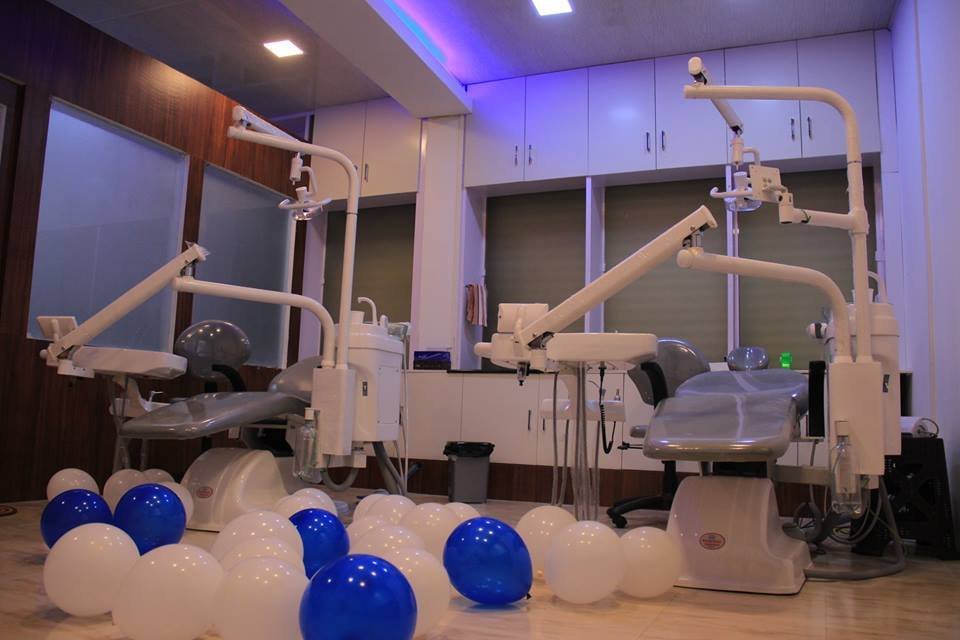
One of the completed projects was for Dr Athul Puravath in Wayanad. The photos below were originally published in my DentalFry clinic-design article and show that clinic’s transformation.
These opportunities helped me make connections. The later problems also cost me relationships. Search visibility had brought me into fields where the consequences of a mistake were much larger than a poorly performing article.
08 · The hardest part to write
I generated the enquiry. I failed to handle the commitment.
On a later clinic project in Kerala, around eight years before this retrospective, I committed to work at approximately ₹12 lakh. As the project developed, the cost estimate rose to around ₹17 lakh.
I did not have enough knowledge of construction estimates to make that commitment responsibly. I relied too heavily on another person for delivery and did not have a sound way to manage the project if that arrangement broke down.
Illustrative comparison of my recalled figures. This is not an audited final bill, a verified loss or a claim about the amount the client ultimately paid.
When the situation became stressful, I switched off my phone and withdrew for a while. The client was trying to reach me, and I was unable to face the conversation. The client eventually completed the work using someone else.
I remember the client as a decent person. I lost that connection and relationship, and I still regret how I behaved. I hope to meet them when I have the courage to do so. That has not yet happened.
I was younger and less mature, but that is context, not an excuse. The commitment was mine. Regardless of the difficulties with delivery, I should have stayed available, explained the situation and worked toward a resolution.
Knowing how to attract a client did not mean I knew how to deliver every service the client needed.
I am leaving the client and collaborator unnamed. The point of including this is to take responsibility for my decisions, not to assign blame. A case study that only covers the rankings would leave out the most important business lesson I learned.
After that experience, I gave up the clinic-interior field and focused on consulting. Later, I shifted my attention to another business and left DentalFry without my ongoing management.
09 · What stays with me
What I would keep—and what I would change.
I would keep the decision to work in a subject I understood, the habit of talking to the audience, and the willingness to improve the website’s organisation. I would change how I documented results, maintained content and accepted delivery commitments.
| Lesson | What the experience taught me | What I would do today |
|---|---|---|
| Choose an informed niche | My dentistry background helped me recognise unanswered questions. | Combine search research with conversations and firsthand knowledge. |
| Write for decisions | Useful explanations led to relevant consulting conversations. | Make the reader’s next step clear and offer only services I can deliver. |
| Organise related content | The topic groups made the site more coherent. | Plan navigation and internal links early; migrate URLs only with a reviewed map. |
| Record the evidence | I cannot now reproduce important growth calculations. | Keep dated analytics exports, enquiry records and a change log. |
| Maintain useful pages | Competition grew while my content lost freshness. | Review important pages regularly for accuracy and reader needs. |
| Know the economics | Product orders brought low margins. | Check fulfilment costs and actual margins before expanding. |
| Respect delivery limits | I accepted work beyond my estimating and project expertise. | Use competent delivery partners, defined scope, realistic estimates and contingency planning. |
| Communicate through trouble | Withdrawing made an already difficult situation worse. | Stay reachable, raise problems early and work toward a documented resolution. |
DentalFry gave me confidence in SEO and WordPress development. It also taught me that trust depends on what happens after a reader becomes a client. That second lesson has shaped my work as much as the first rankings did.
Have a website with useful expertise behind it?
We can look at its content, structure and the business conversations it should support.
Discuss your website10 · Questions about the case study
Frequently asked questions
When did you launch DentalFry, and how much did it cost?
I launched it on 1 August 2016 during my third year of BDS. My starting domain and hosting budget was around ₹2,000. I wrote the articles myself and spent two to three hours a day on the project.
How long did the first ranking take?
I remember reaching position one for “career options after BDS” after approximately six articles and one month. I do not have the original ranking record, and this is not a current ranking claim.
Did you build backlinks?
I did not deliberately run a backlink-building campaign. I focused on content and site organisation. That does not mean the site had no naturally earned links or that links are irrelevant to every SEO project.
Which keyword research tools did you use?
Google autocomplete, related searches and Keyword Planner, together with reading competing pages and speaking with dentists and students. I did not have paid Semrush or Ahrefs subscriptions during the early phase.
Were the 1,000+ enquiries all phone calls?
No. My recollection is more than 1,000 unique enquiries across calls and emails during the 2016 admission seasons. They were not all paying customers. Email enquiries tended to convert better in my experience.
Did silo structure alone produce 1,800% growth?
I cannot establish that. I remember a large improvement within less than 45 days, but the baseline, final counts and calculation are unavailable. The 1,800%+ figure is an unverified remembered estimate, not a measured claim of causation.
Does the Semrush image prove 20,000 daily visitors?
No. It shows third-party estimates and keyword trends, not the original Analytics daily visitor count. My remembered peak of 20,000+ visitors per day remains unverified.
Must every article be 2,000 words or use nested URLs?
No. Those describe parts of my historical approach. Article length should follow the reader’s needs. Relevant internal links and clear organisation matter; a nested path is not a universal ranking requirement.
Did you design seven complete clinics?
Approximately seven clinic-related projects included a mix of interior work and product supply. Some clients needed materials only. Design was handled through a collaborator, so I do not claim sole design credit or seven full interior deliveries.
Is the pictured clinic the project that went wrong?
No. The photographs show a completed clinic for Dr Athul Puravath in Wayanad. The later project discussed in the failure section is separate, and its client is unnamed.
Do you still manage DentalFry or offer clinic interiors?
I no longer actively manage DentalFry. I left the clinic-interior field after the difficult project and focused on consulting before moving to another business. The original clinic article is historical context.
What is the most important lesson?
Useful expertise can help build an audience and a business, but every service commitment needs delivery competence and responsible communication. Generating demand is only one part of serving a client well.
Get more SEO and digital marketing case studies in your inbox
Receive new case studies, practical lessons and ideas from my work—alongside updates on Digital Marketing, AI, Marketing and Technology.
One newsletter from Vishnu Nambiar. Confirm your email to join. Unsubscribe anytime. Privacy Policy.
What would you like to know about this project?
Leave a question or share a similar experience in the comments below. Please avoid posting private client or patient details.
Talk to VishnuDigital Marketing & SEO
LET’S GROW YOUR BUSINESS
How can I help you?
Discuss SEO, paid ads, your website or individual SEO training.